|
|
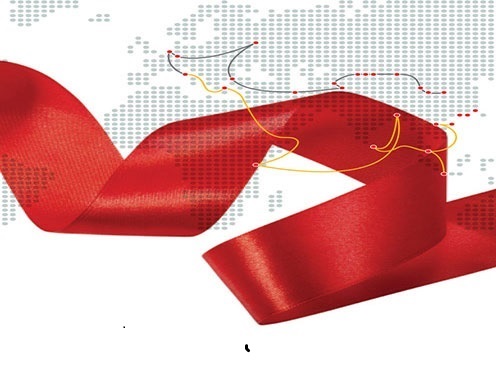
The original Silk Road arose during the westward expansion of China's Han Dynasty (206 BCE–220 CE), which created a network of trade routes throughout what are today the Central Asian countries of Afghanistan, Kazakhstan, Kyrgyzstan, Tajikistan, Turkmenistan, and Uzbekistan, as well as modern-day India and Pakistan to the south, stretching over four thousand miles to Europe. Central Asia was thus the epicentre of one of the first waves of globalization, connecting eastern and western markets, spurring immense wealth, and intermixing cultural and religious traditions.
When president Xi Jinping first announced the initiative during a state visit to Kazakhstan and Indonesia in 2013, a two tier network was envisaged. For the title at least. With the Silk Road Economic Belt shipping overland and the Maritime Silk Road over sea. Also known as the One Belt, One Road Initiative, this title eventually morphed into the Belt and Road Initiative (BRI) that we are familiar with today.
Designed to connect China with the rest of the world, and foster economic growth. BRI is an informal network of countries agreeing under non-binding Memoranda of Understanding (MOUs) on the development of their infrastructure in the form of roads, railways, ports and energy pipelines to ease trade flows, and enhance digital connectivity by setting up data centres.
To date, about 150 countries in Asia, Europe, Africa, and Latin America, accounting for two-thirds of the world's population and 40 percent of global GDP, are involved, directly or indirectly, in BRI-related projects.
In today's world where trade tariffs threaten free trade, it is helpful to identify an alternative large group of countries, for example the BRI participating countries, where the motto is TRADE, in a virtually tariff free environment. Monitoring developments in uncharted waters is what BRI-scope does best. Designed to map out underlying developments and monitor them permanently. It is an indispensable tool for every manager, entrepreneur, policy maker, investors, analyst or journalist, wishing to focus on the BRI-project as it unfolds.
Features
BRI-scope is a new on-line information system that brings into focus the economies and opportunities offered by the participating countries in the Belt and Road Initiative (BRI) project.
BRI-scope uses official data sources only as input. Classifies and restructures the latest data published by the United Nations (UN Comtrade Database), World Bank (International Debt Statistics), International Monetary Fund (International Financial Statistics), International Labour Organization (ILOSTAT), United Nations Conference on Trade and Development (UNCTAD Data Hub) and Club de Paris data, to make the participating countries an open book.
The BRI project has faced criticism over the years. Critics warn that many BRI projects lack transparency and that Chinese investments can be a "debt trap", especially for developing economies. In addition to that, the BRI project is often seen by some in the West as a form of economic neo-colonialism.
Over the past decade, the BRI has also faced criticism over environmental and sustainability concerns. At the same time, various moves have been made in recent years to create a greener BRI. In 2018, for instance, the Green Finance Committee of China Society for Finance and Banking and the City of London's Green Finance Initiative published its Green Investment Principles (GIP) for the BRI. The World Economic Forum and several other international organizations contributed to drafting the principles.
In 2022, the World Economic Forum published a report on creating a more sustainable BRI. "As the world's largest manufacturer of solar panels, wind turbines, batteries and EVs, China is well placed to help deliver low-carbon technologies to emerging and developing economies as part of its Belt and Road Initiative", the report states.
BRI-scope brings two of the most frequently cited objections to the BRI project into close focus: the debt trap and accusations of economic neocolonialism. It also examines the economic relationship between the individual BRI participating countries and China regarding debt and the import and export of goods and services. Metric exercises are also used to examine the correlations between various variables and economic growth.
Key Performance Indicators (KPIs) are presented and updated monthly for each country. Economic variables from our data sources can be correlated. Individual country reports can be configured, downloaded and printed in PDF format, as can, on request, specific research enquiries.
Exploring business opportunities
The Belt and Road Initiative offers a wealth of business opportunities for companies, particularly in the infrastructure development, manufacturing, and technology sectors. Enhanced connectivity can open-up new markets for consumer goods and create new customer relationships, facilitate trade and reduce logistics costs, benefiting companies involved in transportation and supply chain management. For the financial sector, project finance offers considerable potential.
BRI participating countries have varying regulatory environments, so understanding local laws and regulations is essential. Potential risks include political instability, debt sustainability issues, and social and environmental impacts on the economy. Thorough risk assessment is vital before doing business.
BRI-scope allows entrepreneurs to make a prospective selection of participating countries located in a specific region that meet specific business-economic demands; the presence of a skilled labour force, supply chain, tax regime, ease of doing business, to name a few. This allows you to focus on the most viable candidates when deciding where to deploy your business.
Data Sources
International Debt Statistics
United Nations
World Bank
International Labour Organization
ASPEC is a financial-economic Research Consultancy, founded in 1999 and based in the Netherlands. We specialize in creating information products on the basis of in-depth research and offer these on-line to subscribers.
Following several years of development we are launching BRI-scope. To close focus on the ins and outs of China's Belt and Road Initiative (BRI) and its effects on.
Using the official data sources of the World Bank, IMF, UNCTAD, ILO and Club de Paris, BRI-scope monitors all BRI participating countries for their key performance indicators (KPIs), trade links, and debt management, providing users with a vital tool for measuring opportunity potential in the economies of some 150 countries currently.
 Alex Yap, founder of ASPEC Consultancy, was educated at the University of Amsterdam (Econometrics), London School of Economics (Regulation of Financial Markets) and Institut d’Études Politique de Paris — Sciences Po (European Integration).
He has worked for the Dutch Ministry of Finance, joint several working party groups at the OECD (Paris) and at the European Commission (Brussels).
In terms of financial analysis, he worked as a director of an investment research unit of the ING Group Amsterdam.
He was a senior advisor to the National Committee on Governance in Indonesia. Alex Yap, founder of ASPEC Consultancy, was educated at the University of Amsterdam (Econometrics), London School of Economics (Regulation of Financial Markets) and Institut d’Études Politique de Paris — Sciences Po (European Integration).
He has worked for the Dutch Ministry of Finance, joint several working party groups at the OECD (Paris) and at the European Commission (Brussels).
In terms of financial analysis, he worked as a director of an investment research unit of the ING Group Amsterdam.
He was a senior advisor to the National Committee on Governance in Indonesia.
 Rudi Pieters, in charge of system development at ASPEC Consultancy.
He was educated at the University of Eindhoven (Physics). He has 30 year of experience in IT and data analysis.
He has contributed to macroeconomic modelling for the CPB (Dutch macro-economic forecast agency). He has worked for the Dutch Ministry of Finance in The Haque, where he contributed to economic and policy analyses, and where he has led the implementation of an executive information system to monitor the development of the Dutch economy.
He has also worked on the development of an object-oriented database and on the application of that to engineering of document management. Rudi Pieters, in charge of system development at ASPEC Consultancy.
He was educated at the University of Eindhoven (Physics). He has 30 year of experience in IT and data analysis.
He has contributed to macroeconomic modelling for the CPB (Dutch macro-economic forecast agency). He has worked for the Dutch Ministry of Finance in The Haque, where he contributed to economic and policy analyses, and where he has led the implementation of an executive information system to monitor the development of the Dutch economy.
He has also worked on the development of an object-oriented database and on the application of that to engineering of document management.
| Aspec information modules |
 |
 |
|
|